For agencies
Agency planning that keeps clients, people, and tomorrow in step.
Small agencies juggle several clients with the same few people. Stoa helps you place people on client work for the week, then lets each person plan tomorrow so the deadlines you promised still fit in the day.
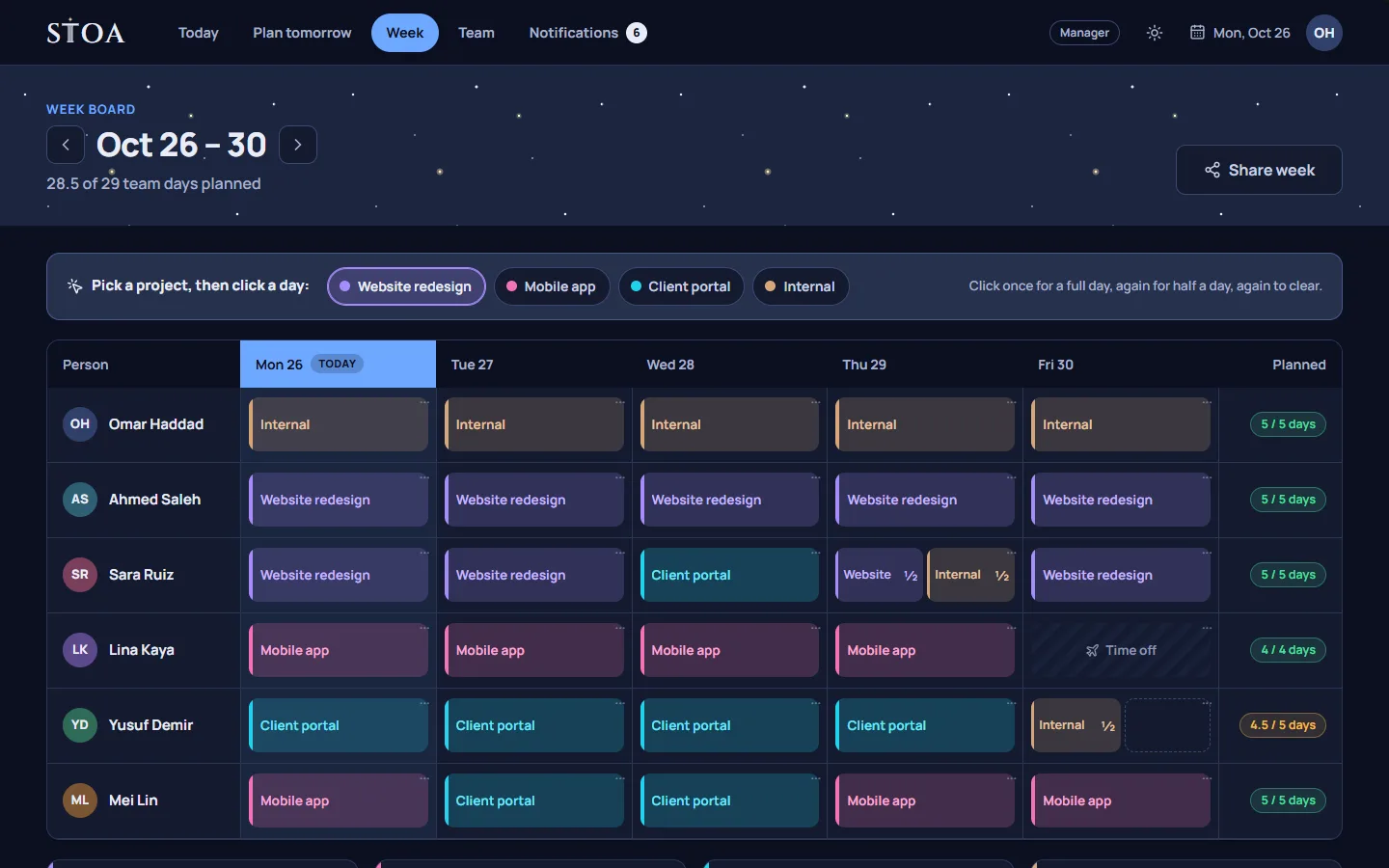
The agency week, as it really is
An agency of eight people might have five active clients, two pitches, and a retainer that always needs “just a small change”. The plan for the week is made on Monday and starts changing on Monday afternoon. Someone is pulled onto an urgent fix. A client moves their review. A designer is waiting on copy that has not arrived.
The hard part is not making a plan; it is keeping the plan and the real day close enough that people can trust it. Stoa does that with two layers: a week board that says who is on which client on which day, and an evening plan where each person decides what they will actually do tomorrow.
Place people on clients by the day
On the week board, each client project is a block of full or half days. You can see at a glance that two people are on the rebrand until Wednesday and that Thursday afternoon is still open for the new request. Days off and team holidays show on the same board, so you do not promise a client a day when the person they need is away.
Working in days, rather than hours, fits the way agencies talk to clients. “Maya is on your project Monday and Tuesday” is a promise you can keep. “Maya will spend 11.5 hours on it” rarely is.
Let each person own their next day
Every evening, each person plans tomorrow. Their plan starts from the week board and from tasks their manager suggested. They put the tasks in order and estimate hours. The tomorrow check then flags the problems agencies run into most: a day that is longer than the working day, a task waiting on someone else’s part, or a deadline that is close and still not planned.
If the copywriter has not planned the copy the designer needs, the designer sees that the evening before, not at 11 AM the next day. One message tonight saves a wasted morning tomorrow.
Show clients the week without showing everything
Clients sometimes ask when their work is scheduled. Stoa can create a read-only link to the week that shows who is on which project on which day. It hides task titles and hours, so you can share the schedule without exposing other clients’ work or your internal estimates. For your own team, an ICS calendar feed puts the plan into whichever calendar app people already use.
Overtime, out in the open
Agency deadlines create late evenings. In Stoa, extra hours are recorded in the end-of-day review and sent up the leader chain to be acknowledged. That makes a hard week visible to the people who can fix it next week, without turning Stoa into a timesheet. Stoa does not run timers or track activity.
What Stoa leaves to other tools
Many agencies also need budgets, billable rates, and profitability reports. Stoa does not do those. It does not do invoicing or client approvals either. It focuses on who does what, this week and tomorrow. Agencies often keep their project tool for briefs and files, and use Stoa for the daily plan. You can import existing tasks from a Trello or Asana export, or from a spreadsheet, as a CSV file.
If you are weighing Stoa against a resource management tool, our comparison with Float describes where each one fits.
A simple price for a small agency
Stoa is priced per team, not per person. Plans cover teams of 2, 6, 10, 15, and 30 people, and everyone on the team is included, so adding a freelancer for a busy month does not change the bill until you outgrow your plan. The pricing page has the details, and every plan starts with a 14-day free trial.
Plan tomorrow tonight, starting this week.
14 days free, no card needed. One price covers the whole team, from 2 to 30 people.